Grace’s night at the East River track
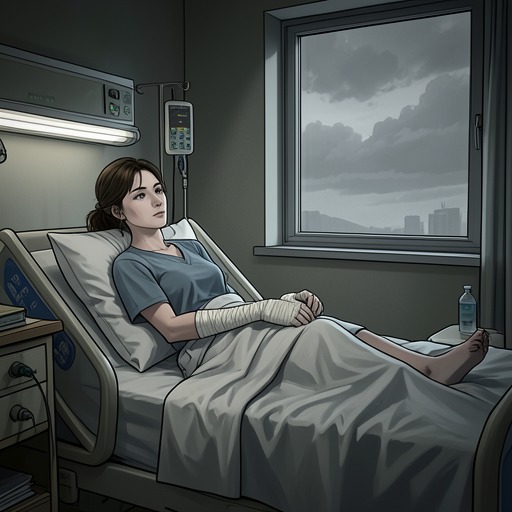
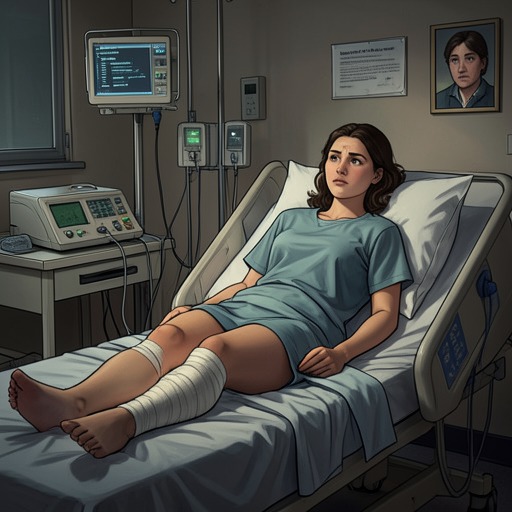
Our Chemical HeartsGrace Town’s night at East River High School’s track turns an act of attempted exercise into a devastating revelation: Henry Isaac Page and Murray Finch witness her run without her cane, then use it to beat her injured leg. The scene makes visible both the severity of Grace’s continuing physical impairment and the violence of her effort to force herself beyond it. What Henry sees becomes difficult to forget, even as he and Murray feel they have intruded on something deeply private.
The covert visit
It is Tuesday night, one week after Madison Carlson has given Henry and Murray insider information, and the two drive toward East River High School to follow Grace. Murray dresses for the occasion in a trench coat and fedora, with an unlit cigar between his lips, and narrates their pursuit in the manner of a hard-boiled detective. His invented rain and melodramatic description of the woman Henry is chasing turn the stakeout into a joke; the actual night is dry, and the humor cannot prepare them for what they find.
At the school, they leave the deserted bleachers and wait in the shadows. Across the field, Grace is alone under the fluorescent lights. The distance and secrecy matter: Henry and Murray are not invited witnesses, but they see a struggle Grace has not shown them in ordinary school life. Their presence also makes the scene a turning point in Henry’s understanding of her. He has known that she walks with a cane, but not what she is trying to do when no one is watching.
Grace’s attempt to run
Grace is wearing her familiar oversized, boyish clothes, but her hair is pulled back and her face is flushed and glazed with sweat. Bent over with her hands on her knees, she catches her breath. Then, without the cane, she limps back to the starting line, kneels, and begins to run. Her limp is irregular; each impact of her injured leg against the red rubber track deepens the grimace on her face. Murray’s companion asks what she is doing, but the scene offers no answer from Grace herself: the effort is expressed through movement and pain.
After about a hundred feet, Grace stops. She screams, pulls at her hair, retrieves the cane she has left at the side of the track, and strikes her injured leg with it repeatedly. Then she sinks to the ground in a sobbing heap. The cane, ordinarily a support for her mobility, becomes an instrument of harm. The act sharply distinguishes this from a straightforward attempt at rehabilitation: Grace is not simply unable to continue running; in the aftermath, she directs her rage against the already injured limb. Henry’s observation that her limp remains pronounced follows from this witnessed brutality, though the scene does not establish that this single episode caused the ongoing impairment.
Witnesses and immediate aftermath
Murray’s comic detective performance collapses into a more serious response. He swears, takes another cigar from his coat, and lights it; this time Henry does not stop him. Murray resumes the noir metaphor, calling Grace secondhand smoke and warning, in effect, that Henry’s growing attraction will make him suffer. The image recasts the stakeout’s earlier joke as a grim recognition: what Henry is drawn toward is also bound up with pain he cannot repair simply by watching.
The two leave the scene with guilt as well as alarm. The next afternoon, they decide not to tell Lola Leung what they saw. They anticipate that she would identify Grace as emotionally damaged and warn Henry away, but they also already feel bad about their own conduct and what they witnessed. For Henry, the memory clings through the day, and he tries to repress it. Murray instead urges him to ask Grace out. The contradiction gives the episode much of its force: Henry has seen a reason to fear for her and to fear being hurt, yet the sight does not end his pursuit.
Injury, repetition, and later change
The track scene gains physical specificity later, when Henry sees the graft scars on Grace’s thighs and calf. She explains that surgeons harvested skin for grafts and had to return for more when the first graft did not take. Her calf is badly damaged, and fresh bruises and welts mark the unscarred flesh; the narrative identifies them as keepsakes from her latest expedition to the track. Henry’s earlier sight of Grace striking her leg therefore returns not as an isolated shock but as part of a repeated pattern of physical effort and injury. The episode’s violence is not abstract: it sits alongside the scars, grafts, and lasting mobility impairment that shape her daily life.
After Christmas break, Grace’s limp becomes less noticeable, and she eventually stops using her cane altogether and begins driving to school. This later change gives the night at the track a painful contrast, but it does not make the episode a simple before-and-after account of recovery. The book also connects Grace’s gradual improvement to her imagined debt and self-punishment, while showing her continuing to wear some of Dominic Sawyer’s clothing even as she increasingly chooses her own. The track episode is consequently a crucial act of witnessing: it reveals how much pain lies behind Grace’s attempts to move forward, while leaving the meaning and limits of recovery more complicated than the disappearance of a cane.